
Buying a Used Luffing Tower Crane With a Restricted Slewing Envelope
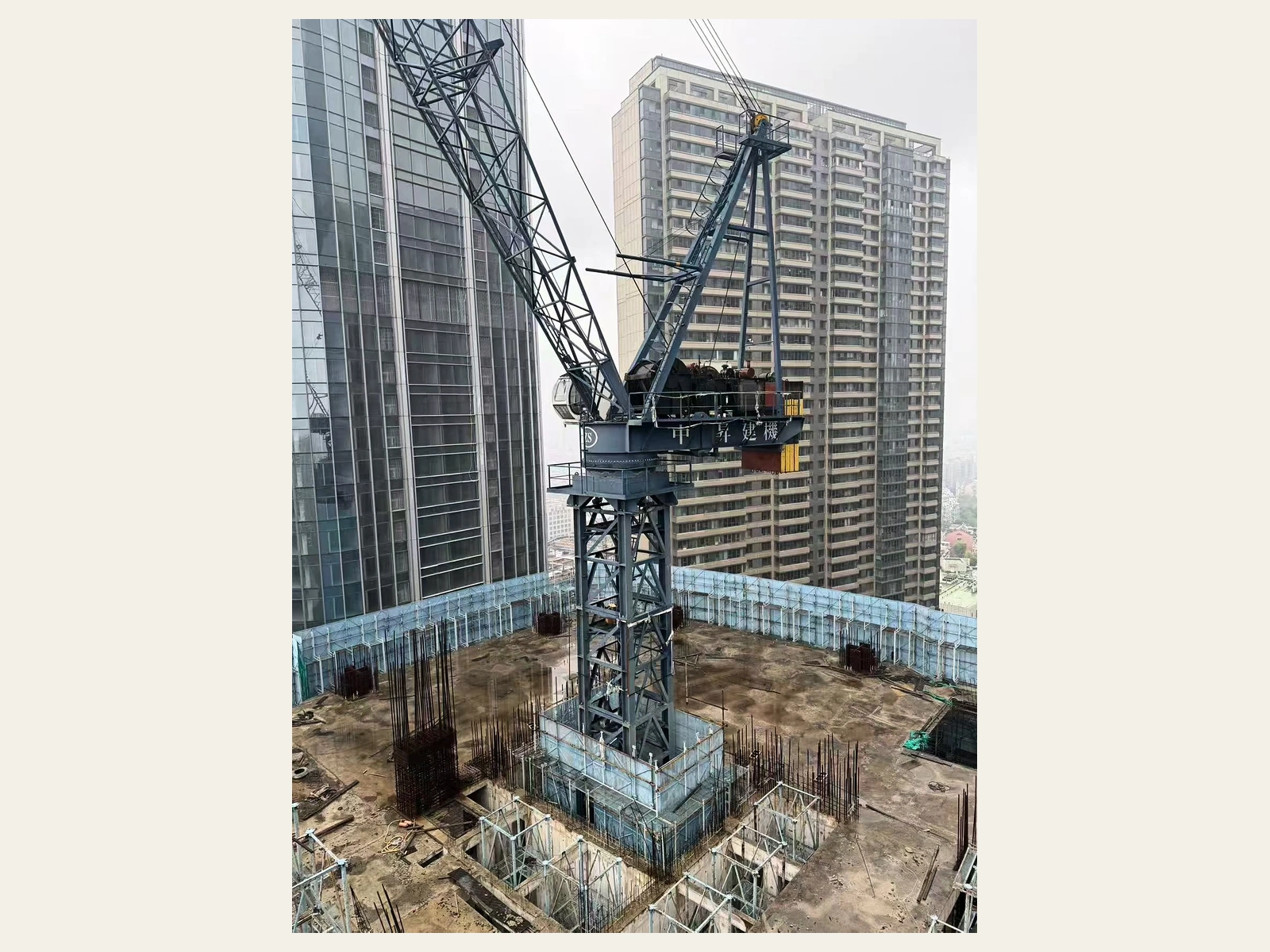
Luffing crane and surrounding buildings, illustrating the need to review the complete site geometry.
A used luffing tower crane may look suitable for a narrow urban site while still creating a problem after working hours or when the building is finished. The purchase decision needs more than a jib length and a photograph. Request the exact crane configuration, its documented movement envelope, and a workable route for removing its components before committing to the equipment.
Before you request a quote
This is a procurement review of the information your project team needs. Operating and parking decisions belong in the crane's current manufacturer instructions and the site team's approved plan.
Separate three different envelopes
Ask the seller to distinguish the working envelope, the documented out-of-service envelope, and the space needed during erection and dismantling. A working-radius figure does not describe all three.
For a luffing crane, raising the jib does not make every position suitable for unattended parking. HSE's safety alert explains that an inappropriate out-of-service radius can prevent the crane from weathervaning freely. It also calls for checking interference involving both the front jib and rear counter-jib. Request model-specific information rather than assuming that the smallest quoted radius is the safest choice. HSE guidance on luffing cranes in high winds.
Ask for the configuration behind the drawing
Send the seller one request covering:
- Manufacturer, full model designation, serial number and clear identification photographs.
- Installed jib length and section arrangement, counter-jib arrangement, ballast schedule and cabin position.
- Tower system, planned heights, climbing arrangement and any connecting sections.
- The document reference and revision supporting the quoted out-of-service envelope.
- Drawings identifying the front, rear and elevated components that need to remain unobstructed.
- Details of alterations, exchanged assemblies or optional equipment affecting that configuration.
These distinctions have practical consequences. Liebherr's published information for the 195 HC-LH describes separate counter-jib geometry, tower-system options and cabin positions. Those features illustrate why a model name alone cannot stand in for a configuration drawing; their dimensions must not be transferred to a different used crane. Liebherr's configuration information for the 195 HC-LH.
Compare the crane with a phased site drawing
Provide a dimensioned plan and relevant elevations showing the proposed tower position, neighbouring buildings, property boundaries, other cranes, scaffolding and overhead restrictions. Record any known oversailing or airspace limits separately from the crane's mechanical dimensions.
Repeat the comparison for the early structure, the maximum building height and the final roof arrangement. A space that is clear during excavation may later contain a façade, roof plant or temporary works. Ask the project planner to identify unresolved conflicts and the information needed to resolve them. Do not interpret a seller's radius sketch as permission to cross a boundary.
Confirm the exit route before the entry route disappears
Request the dismantling component schedule and review it against the finished site. Identify component dimensions and weights, the intended support-crane positions, temporary storage areas and truck access. Include gates, turning space, underground structures beneath proposed access areas and any planned removal of temporary openings.
Ask what is included in the shipment and what the erection or dismantling plan assumes will be supplied separately. Manitowoc's MRH 175 brochure describes model-specific transport packages and assembly features, demonstrating that delivery planning depends on how a particular crane divides into components. A container count from that brochure is not a transport estimate for another machine. Potain MRH 175 manufacturer brochure.
Use a short procurement request
| Buyer supplies | Seller is asked to identify |
|---|---|
| Site plan, elevations and boundaries | Exact configuration and supporting drawings |
| Required hook heights and building phases | Proposed tower and climbing arrangement |
| Known neighbouring-crane and airspace constraints | Relevant working and out-of-service envelope documents |
| Access and finished-site removal constraints | Component schedule and dismantling assumptions |
Keep missing documents visible in the quotation comparison. A quote with an unresolved envelope or removal route should remain an unresolved option, rather than appearing equivalent to a documented proposal.
Frequently asked questions
Is an advertised out-of-service radius enough?
No. Ask which configuration, tower arrangement and document revision it describes, then have the project team compare that information with the site.
Will two used cranes with the same model name have the same envelope?
Do not assume so. Compare their jib arrangements, rear assemblies, tower systems, optional equipment and documented modifications.
What if the final dismantling route is still undecided?
Record it as an open procurement issue. Obtain the component schedule early so the project team can test the alternatives before access is lost.
Request unit-specific information
For a broader crane-type comparison, read the luffing-versus-flat-top site-fit test. Browse the tower-crane listings, then send the model and your site constraints to start a more specific enquiry.