
How to Check a Used Tower Crane Load Chart Before Requesting a Quote
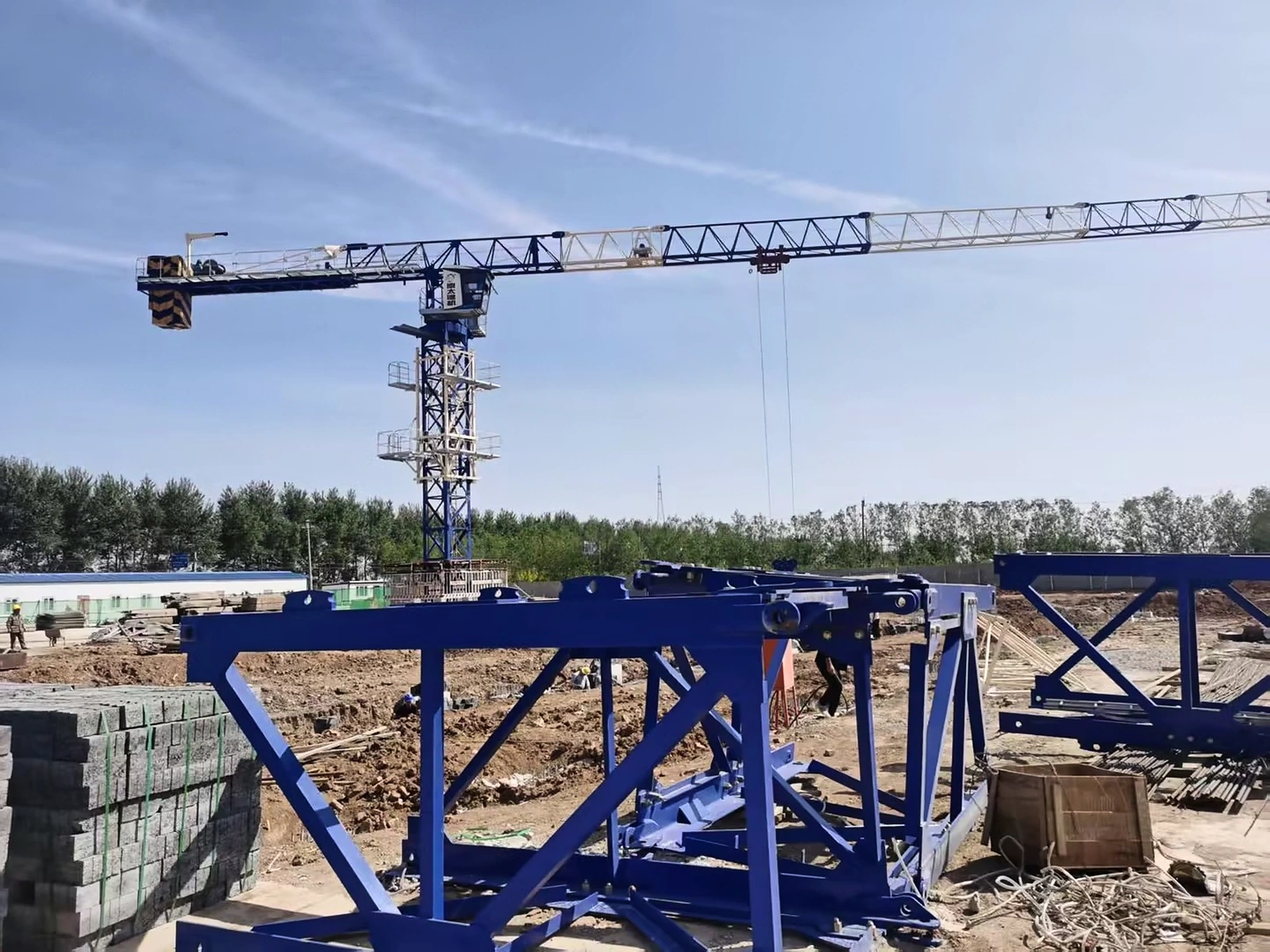
Tower crane and steel sections shown as an equipment configuration illustration.
A listing that says “10 ton tower crane” does not tell you whether the machine can handle your project’s most demanding lift. Before comparing prices, describe what must be lifted, where it must be placed and the configuration required on site. Then ask the supplier for the manufacturer’s documents that match the actual crane being offered.
Before you request a quote
This approach helps procurement teams remove unsuitable machines from a shortlist before paying for inspection, freight or a deposit. The final lifting assessment belongs to your qualified lifting planner and the applicable manufacturer instructions.
Start with the lift requirement
Prepare a short list of representative loads: the heaviest item, the item placed furthest from the tower, and any large object whose dimensions affect handling. For each, record the documented weight, pickup and placement locations, required hook height and the rigging arrangement your lifting planner intends to assess.
For example, an enquiry stating “we need a 10 ton crane” leaves the supplier guessing. “We need to place a panel with a documented item weight of 3 tonnes at approximately 40 metres from the tower, subject to our engineer’s review of rigging and the complete lift” provides a useful starting point. Those numbers describe a hypothetical enquiry; they do not establish an approved lift.
Separate maximum capacity from capacity at reach
Maximum capacity and capacity at the end of the jib are different specifications. Manitowoc’s published Potain MR 229 example lists a 14 tonne maximum capacity and a 2.7 tonne tip capacity at full reach. This is a manufacturer example illustrating the distinction, not a rating for another Potain model, a JIANGHAN crane or a machine in a current sale listing. Manitowoc MR 229 project and specifications.
Do not assume that a larger headline tonnage guarantees a better result at your required radius. Ask your lifting planner to compare the applicable chart for each candidate configuration, including the chart notes and the treatment of hook blocks, lifting accessories and other deductions.
Match the documents to the offered machine
Ask for a readable nameplate photograph and the relevant manual and capacity chart pages. Record the manufacturer, complete model designation, serial number where available, year and document revision. If a suffix or model variant differs between the plate and the brochure, ask the supplier to resolve the difference in writing.
The importance of retaining the applicable capacity charts and operating information also appears in the U.S. construction regulation OSHA 1926.1417. That regulation is a U.S. reference; your destination’s requirements must be checked separately. OSHA equipment operation documentation.
Confirm the complete configuration
Use this table to compare offers on the same basis. The presence of a component in photographs does not establish that it is included in the price.
| Item to confirm | Evidence to request | Why it affects the purchase |
|---|---|---|
| Jib arrangement | Exact proposed length and section list | The configuration reviewed by your planner must be the configuration supplied |
| Mast and height | Mast family, section quantity and proposed installation arrangement | A quoted height alone does not establish compatibility or approval |
| Counterweight and base | Included component list and applicable drawings | Missing or mismatched items can change the project scope |
| Hoisting configuration | Relevant manufacturer documentation and supplied mechanism identification | Different options can have different documented performance |
| Condition and alterations | Inspection records, repair history where available and declared modifications | A matching chart does not prove the condition of a used machine |
Have the responsible engineer review foundations, ties, climbing arrangements and site constraints before the configuration is accepted. A supplier’s product photo cannot replace that review.
Send a request that can be answered precisely
You can use this enquiry text:
Please propose used tower crane options for the attached lift requirements and site layout. For each option, provide the complete model designation, nameplate photographs, the applicable manufacturer capacity chart, proposed jib and mast configuration, included component list, current condition evidence and items excluded from the quotation. Please identify information still required from our engineer before configuration confirmation.
Keep unresolved items visible in your comparison sheet. A machine with missing documentation remains an unconfirmed candidate even when its asking price is attractive.
Frequently asked questions
Can I choose a crane using maximum tonnage alone
No. The relevant configuration and capacity at the required radius need review against the manufacturer’s documents and your actual lift requirements.
Can I use a chart downloaded for a similar model
Use it for early research only. Obtain confirmation that the document applies to the exact offered model and configuration before your technical team accepts it.
Does a valid chart prove that a used crane is ready to operate
No. Document matching, machine condition, installation planning and destination requirements are separate checks.
Request unit-specific information
For a broader capacity-class comparison, read the 8 ton 10 ton and 12 ton tower crane buying guide. Compare used tower crane listings, then send your site and lift requirements when requesting a configuration-specific quotation. Ask for current availability and evidence for the individual machine.